
Free cookie consent management tool by TermsFeed
Skip to content

Getting a Mortgage on Non-Standard Construction Properties

Found a home you absolutely love, only to hear it’s “non-standard construction”? Don’t panic. Getting a mortgage on non-standard construction properties is often very possible; it’s just a case of knowing which lenders will say yes and what they’ll need to see. That’s exactly what we do, so you can stop worrying and start planning your move.

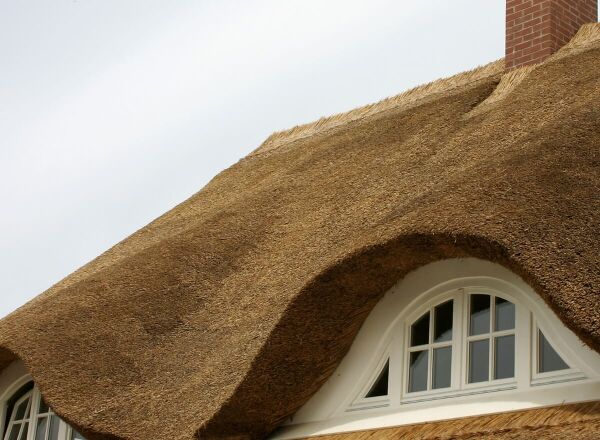
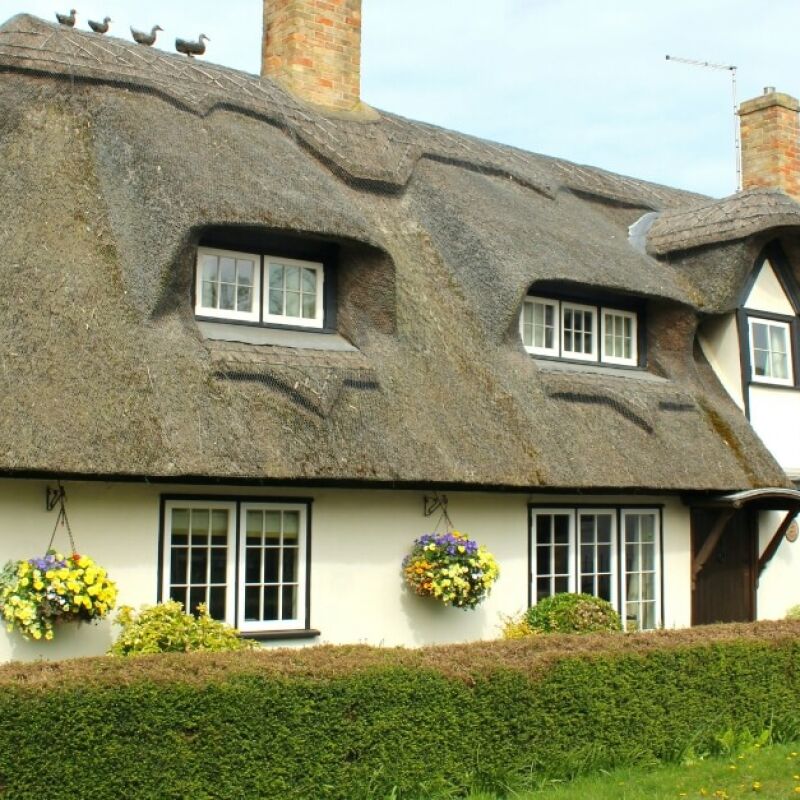
Thatched roof house which is a non-standard construction

You’ve finally found it. The property you’ve spent months searching for.

Maybe it’s a chocolate-box thatched cottage in a Somerset village, a characterful cob farmhouse in Devon, or a spacious ex-council semi in the heart of London.

Then the estate agent mentions two words that make your stomach drop: “non-standard construction.”

Suddenly you’re wondering whether any lender will touch it, whether you’ve wasted your time, and whether you should walk away before you get any more attached.

Well, there’s no need to worry as in many cases getting a mortgage on non-standard construction properties is absolutely possible. It’s rarely a question of whether any lender will say yes, instead it’s often a question of which lender, on what terms, and with what paperwork in place. And that’s exactly where we come in…

With access to over 100 different lenders and more than 28,000 mortgages, our award-winning advisors are best placed to help get you into your new ‘non-standard’ home.

In this guide, we’ll explain what non-standard construction really means, which types lenders are comfortable with (and which make them nervous), how to spot potential problems before you’ve spent a penny, and how we help buyers across the UK get the mortgage they need.
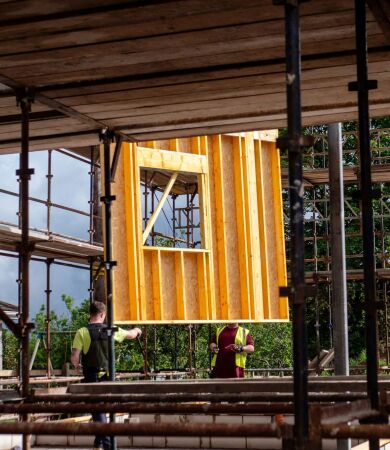
Two construction workers lifting a wooden wall frame on a scaffolding site

What Does “Non-Standard Construction” Actually Mean?

To a mortgage lender, a “standard” home has brick or stone walls and a pitched roof covered in tiles or slate. It’s what most UK homes are built from, it’s what surveyors and insurers know best, and it’s what lenders are most comfortable lending against.

Anything that strays from that formula in its walls, frame or roof can be classed as non-standard construction. That covers a surprisingly wide range of homes, from a 400-year-old thatched cottage to a post-war concrete council house, a 1940s steel-framed semi, or even a brand-new home built in a factory.

Two things are worth knowing straight away.

First, “non-standard” is a lending label, not a verdict on quality. Plenty of non-standard homes are well built, warm and full of character.

Second, lenders don’t all use the same definition. One lender might treat a modern timber-frame home exactly like a brick one, while another wants extra reports before it will even consider it. This inconsistency is one of the main reasons non-standard purchases trip people up.

Because we always have your best interests at heart, you need to know that your home may be repossessed if you do not keep up repayments on your mortgage.

There may be a fee for mortgage advice. The actual amount you pay will depend on your circumstances.

The fee is up to 1%, but a typical fee is 0.3% of the amount borrowed.

What Are The Types of Non-Standard Construction?

Not all non-standard homes are created equal in the eyes of a lender. Some barely raise an eyebrow; others need very specific paperwork before anyone will lend. Here’s a quick guide to how lenders typically view the most common types.

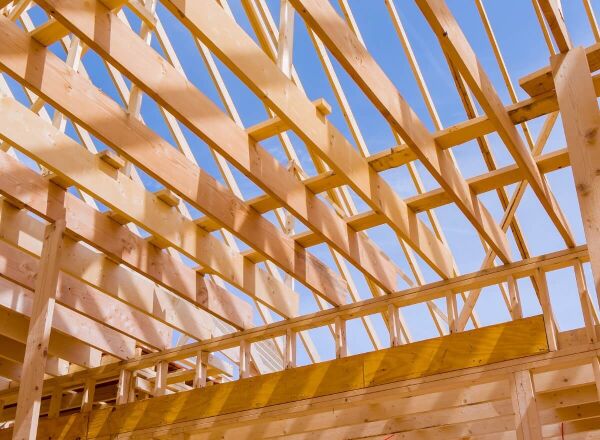
  1. A timber framed house
    01/ 05

    Timber framed houses

    Timber frame is far more common than most people realise. According to the Housing Market Report 2025, 24% of all UK housing starts in 2024 were timber frame. And the Structural Timber Association has set out plans to double timber frame’s share of new homes in England to 25% by 2030.

    The good news? Modern timber-frame homes, particularly newer ones covered by an NHBC or equivalent warranty, are accepted by most lenders on normal terms. However, older timber-frame homes attract more questions and often require evidence of good condition

    One word of warning: timber frame isn’t always obvious. A home can look like it’s built of brick when the brick is actually just an outer skin with a timber frame behind it. If this only comes to light at valuation, it can derail an application that was placed with the wrong lender.

  2. BISF house
    02/ 05

    Metal framed houses

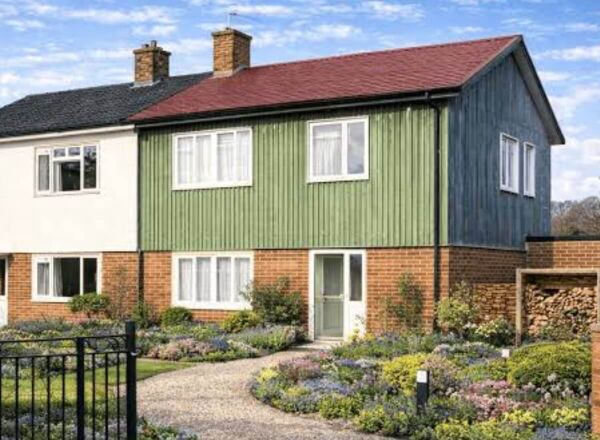
    Many steel-framed homes were built in the years after the Second World War, when Britain needed houses quickly. The best known are BISF (British Iron and Steel Federation) houses, often recognisable by the metal cladding on their upper floor.

    The main concern for lenders is corrosion of the steel frame. Plenty of steel-framed homes are mortgageable, but the valuer will want to be comfortable with the frame’s condition, and some lenders ask for a structural engineer’s report.

  3. A precast concrete house
    03/ 05

    Precast concrete houses

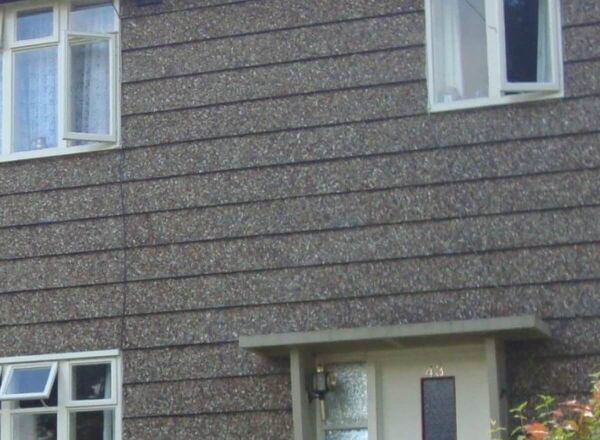
    Precast reinforced concrete (PRC) homes were another post-war answer to the housing shortage.

    Over time, the steel reinforcement inside some of these concrete panels was found to corrode, causing the concrete to crack. As a result, the government designated a long list of PRC house types as defective under the Housing Defects Act 1984, which was later folded into the Housing Act 1985.

    Here’s what that means for you as a buyer:

    • Unrepaired designated defective homes are very hard to mortgage. Most lenders won’t consider them, which is why they often sell to cash buyers at a discount.
    • Repaired homes can be a different story. If the property has been repaired under an approved scheme and comes with a PRC certificate, a number of lenders will consider it.
    • Semis and terraces need extra care. Some lenders require the attached neighbouring home to have been repaired as well, not just the one you’re buying.
  4. An in-situ concrete house
    04/ 05

    In-situ concrete houses

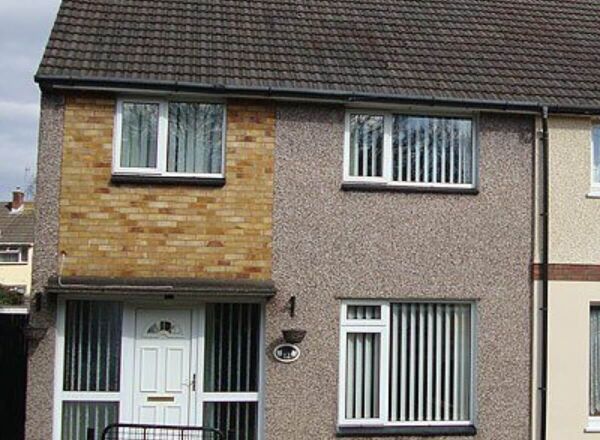
    While PRC homes were assembled from panels made in a factory, in-situ concrete homes had their walls poured on site into temporary moulds, or “shuttering”. The result is a continuous concrete wall rather than a jigsaw of separate panels held together by a concrete or steel frame.

    That difference in method makes a real difference to lenders. Because there are no slender reinforced posts and panel joints to corrode, in-situ systems avoided the structural problems that got so many PRC types designated defective.

    If you’re looking at an ex-council home and aren’t sure whether it’s PRC or in-situ, send us the address and we’ll help you find out before you commit to anything.

  5. A thatched roof
    05/ 05

    Non-standard roofs

    • Thatch. Plenty of lenders will consider it, but they’ll want to see the condition and remaining life of the thatch, a good maintenance history, and proper fire cover.
    • Flat roofs. A small flat-roofed extension rarely causes a problem. Concern grows when flat roofing covers a large share of the property, as some lenders apply a percentage limit.
    • Corrugated iron. Narrows your lender choice considerably. Valuers will check for rust, whether it’s original or a later addition, and what sits underneath.
    • Shingles. Timber, slate, metal or fibre-cement strips. Lenders will want evidence of remaining lifespan, and older shingles may contain asbestos cement, which needs flagging.
A woman sitting on the sofa looking at her laptop

Can you get a mortgage on non-standard construction homes?

Yes, though it’s more involved than a standard mortgage application.

Many high-street lenders are cautious about these properties, as they can be harder to value, insure, and resell, so applications are sometimes declined or larger deposits required.

That said, a good number of specialist and even some mainstream lenders do offer mortgages on non-standard builds, particularly once they understand the construction type, age, and condition.

Expect to need a full structural survey, and be prepared for rates or deposit requirements that may differ from standard properties.

As a broker experienced in securing mortgages on non-standard construction homes, we know exactly which lenders are comfortable with your specific property type and help you avoid wasted applications.

Family sitting on the sofa using a laptop

Can you get home insurance on non-standard construction homes?

Yes, though as you may imagine, not every insurer will offer home insurance on non-standard construction homes.

Non-standard construction properties can present higher risks around fire, weather damage, or costly rebuilds, so many standard insurers decline them or apply strict conditions.

Specialist insurers, however, fill this gap, offering policies tailored to your property’s specific construction, age, and condition.

When arranging cover, insurers will typically want details of the building materials, roof type, and any past claims or structural work. Premiums for home insurance and excesses can be higher than for standard homes, reflecting the increased risk or rebuild cost.

650+ 5 Star Google Reviews

Don’t Take Our Word, Take Theirs

Read All Our Reviews
Absolutely amazing service from start to finish. They replied to every message so quickly and made the whole experience feel really personal. I originally found the whole process of getting a mortgage intimidating, but they made everything so easy to understand. Right up to the day of the sale, we received weekly email updates, which was incredibly reassuring. Truly outstanding service.

Adele Sanford

Home Mover

Louis goes above and beyond. He’s polite, patient and explain things clearly and concise. He provides reassurance, especially when you’re new to the process. He’s flexible and has worked around family to support meetings at times that suit us. Louis has helped us more than anyone else in our moving house journey and I could not recommend him enough! Thank you so much for all your support.
Molli Jones

Molli Jones

Home Mover

I recently had the pleasure of working with Janek on the purchase of my first home. As a first-time buyer stepping into the unknown, I had many questions and Janek answered every single one clearly and patiently. Janek was incredibly supportive throughout the process, always willing to work around my busy schedule and never once making me feel rushed. He made the whole experience far less stressful than I expected.
Jack Tucker - First-Time Buyer client of The Levels Financial standing outside of his new house while holding up the keys

Jack Tucker

First-Time Buyer

I would highly highly recommend The Levels and will be recommending to anyone I know in the future! I feel so thankful and lucky that Nikki was my mortgage advisor, I couldn’t have asked for anyone more better! Nikki provided me with a lot of support and always kept me updated all the way through my application. Nikki was extremely patient with me and made sure I was financially stable before I agreed to anything.
Yasmin Knott - First-Time Buyer client of The Levels Financial

Yasmin Knott

First-Time Buyer

The levels were professional, responsive and I trusted them completely to guide me to make the best decision for myself. I will highly recommend them to anyone looking for help with a mortgage. I cannot praise Luke enough, he was friendly, excellent at communicating and made me feel at ease throughout the whole experience. Luke was always at the end of the phone and the Teams calls we had felt relaxed, productive and informative.
Kate New - home mover client of The Levels Financial

Kate New

Home Mover

Why Hundreds Have Trusted Us For Their Move

The directors of The Levels Financial with the ESTAS award for the best mortgage advisor in the South West for customer service 2025

Award-winning customer service, guaranteed every time

We don’t hire brokers based on how much they can earn us. They’re chosen because they genuinely understand the stress people can experience when making financial decisions and want to do everything in their power to take that stress off your shoulders.

It’s obviously easy for us to just say that but fortunately we can also prove it. Last year we were officially named the best mortgage broker in the South West for customer service and second best in the whole of the UK. And these aren’t awards handed out by stuffy judges picking their favourites, they’re decided entirely by rigorously verified reviews from real people who have used our services.

A woman looking over her documents for remortgaging while sitting in her kitchen

Saving you money today, and every single day from now on

Everyone wants to know they’re getting the best deal, right? Well, with our network of over 100 lenders and access to more than 28,000 mortgage products, we’re perfectly placed to find it. That means more money staying exactly where it belongs: in your pocket.

However, securing you a great rate now is just the start of our job. We’ll constantly monitor your mortgage throughout your entire fixed term and alert you the moment a better deal becomes available. That means that where others might end up paying more, you’ll be saving money long into the future.

Make your move with us

Book a free, no obligation consultation with one of our mortgage advisors to talk through your options. We know that life gets busy so as well as standard working hours, we’re also available for evening and weekend appointments.

How can you tell if a house is non-standard construction?

Some non-standard properties are obvious at a glance. Others hide in plain sight, blending in so well you’ll need to dig a little deeper to uncover the true construction type. Here’s how:

  1. Check your paperwork. Original construction records may already be sitting in a drawer somewhere; dig them out if you can.
  2. Bring in a building surveyor. A bespoke survey will pinpoint the construction type. Just make sure your surveyor knows the non-standard types common in your area.
  3. Ask your Local Authority. Their Building Control department may hold online records worth checking.
  4. Chat to your neighbours. Many non-standard homes were built as semis or terraces, so a neighbour with a matching property could confirm what you’re dealing with.
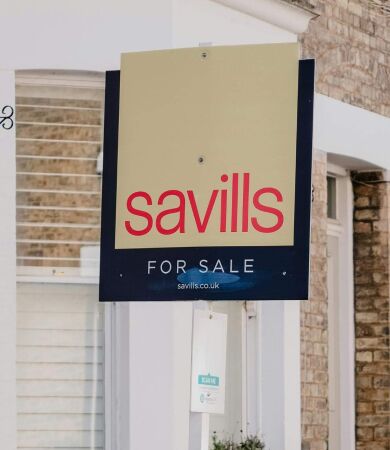
A 'for sale' sign outside a brick house

Should you buy a non-standard construction home?

Non-standard construction homes are almost always cheaper, which can make them an attractive option for budget-conscious buyers. But that lower price tag comes with some trade-offs.

Before you take the plunge, here’s what to weigh up:

  • Condition. Is the house in good shape, or does it need work? Factor any repair costs into your offer.
  • Property type. Research the problems other owners have faced with this property type, so you know what might be waiting for you down the line

At the end of the day, only you can decide if a non-standard construction home is right for you. Well-maintained, many of them make perfectly great places to live; the key is arming yourself with reliable information on the property type so you can make the call with confidence.

Frequently Asked Questions

It depends on the construction type and the lender. For widely accepted types, such as modern timber frame or standard concrete, you may need no more than a standard deposit. For more unusual construction, many lenders cap lending at around 75% to 85% of the property’s value, meaning a deposit of 15% to 25%.

Technically, yes, but modern timber-frame homes are so common that most lenders treat them much like brick-built homes, particularly newer homes with a structural warranty. Older timber-frame homes may face more scrutiny.

A PRC certificate confirms that a precast reinforced concrete home has been repaired under an approved scheme. Most lenders need to see one before they’ll consider lending on a PRC house that was designated defective. Without it, you may find the property very difficult to mortgage or sell.

A full application usually involves a hard credit search, which is recorded on your credit file. One search is

Your lender will carry out its own valuation, but for most non-standard homes we’d recommend your own RICS Level 3 building survey. It gives you a far more detailed picture of the property’s condition and any likely repair costs, and some lenders may ask for specialist reports on top.

Yes. Switching to a new deal with your existing lender is often the simplest option, as it usually doesn’t require a new valuation. If you want to move to a different lender, it will need to accept the construction type, so it’s worth getting advice before you apply.

Still have questions?

Reach out to us anytime for assistance.

Contact Us